Islamic Prayer Salah Time Guidance
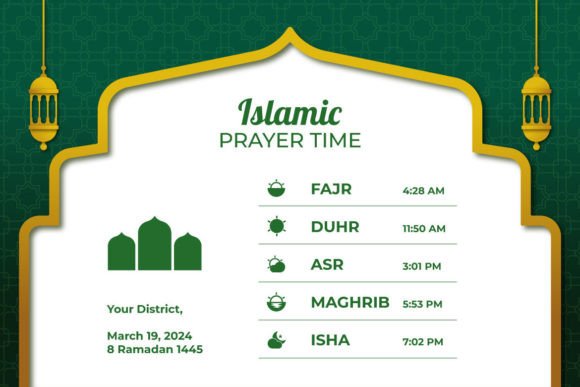
For over 1.8 billion people, the rhythm of life isn't dictated by office clocks or calendar invites alone. It flows through a much older, richer cadence — the five daily prayers, known as Salah. The Islamic Prayer Salah Time Guidance infographic strips away the noise and restores what often gets overlooked in the constant push of modern schedules: a clear, visual, and deeply human reminder of when to pause and connect. Whether you're a graphic designer crafting community resources, a busy entrepreneur trying to integrate spirituality into a packed day, or an educator helping young Muslims understand their faith's heartbeat, that simple chart holds more creative and practical potential than you might think.
Why the Five Prayer Windows Shape More Than a Schedule
Each Salah has a time window linked to the sun's position — Fajr before dawn, Dhuhr after the sun passes its zenith, Asr in the late afternoon, Maghrib just after sunset, and Isha when twilight disappears. These aren't rigid punctualities; they're invitations. The Islamic Prayer Salah Time Guidance doesn't merely list numbers. It visually maps a day-long dialogue. For marketers and small business owners, understanding this rhythm unlocks empathy. A campaign scheduled just before Maghrib on a Friday might miss an entire audience who is preparing to break fast or heading to Jumu'ah. That infographic is not only for personal worship; it's a communication tool.
What makes this guidance particularly useful is its adaptability. While the core times originate from specific astronomical calculations, the infographic can be customized with latitude-adjusted timetables, local mosques' iqamah timings, or even Moon phases. Hobbyists who love paper crafting have turned the same Salah time structure into rotating prayer wheels for children. The visual clarity of the chart — often a circular timeline with sun icons and color gradients — reduces cognitive load. No scrolling through a complex app. One glance, and the day's spiritual anchors are known.
Creative Applications for Designers, Educators, and Publishers
If you're a designer handed the Islamic Prayer Salah Time Guidance, you aren't just placing text on a poster. You're translating a sacred rhythm into form. Consider the use of negative space to represent the quiet after Fajr, or warm earth tones for Asr to echo the dipping sun. Small business owners who run halal cafés have printed custom versions on takeaway sleeves — turning a mundane cup into a gentle nudge for remembrance. Publishers of Islamic children's books have adapted the infographic into sticker charts where kids mark each completed prayer, blending spiritual discipline with gamified learning.
There's also a quiet rise in digital journaling. Bloggers and freelance writers weave the five prayer times into reflective layouts. One approach pairs each prayer with a short journal prompt: What intention did you set at Fajr? What gratitude surfaced during Maghrib? Framing the Islamic Prayer Salah Time Guidance as a reflective scaffold rather than a dry list turns it into a mental wellness tool, not just a religious obligation.
Translating the Infographic for Different Platforms and Audiences
The same core data serves wildly different contexts. An educator explaining Salah to non-Muslim art students might overlay the times onto a 24-hour color wheel, linking each slot to a short description of the prayer's meaning without using overwhelmingly Arabic terms. The emphasis then shifts from ritual to universal concepts: stillness, gratitude, mid-day reset. Meanwhile, a tech-savvy entrepreneur might embed the infographic into a smart home dashboard. Imagine the screen in a family kitchen that dims slightly and displays a quiet Fajr reminder ten minutes before the window closes.
Freelancers who design for mosque boards know that readability under poor lighting or from a distance demands heavy contrast and large sans-serif numerals. In that scenario, the Islamic Prayer Salah Time Guidance becomes a workhorse of functional design, stripped of decoration but strong in hierarchy. Alternatively, a marketer launching a modest fashion line could use a stylized version as a brand asset: a soft, water-colored Salah wheel posted on social media every Friday, gently aligning the brand with the community's spiritual calendar.
Keeping the Schedule Authentic Without Overcomplication
One of the biggest pitfalls with prayer time charts is accuracy fatigue. The Islamic Prayer Salah Time Guidance must respect the fact that calculation methods vary — Umm al-Qura, ISNA, Muslim World League, and others can shift Dhuhr or Asr by several minutes. A smart infographic design accounts for this by leaving a small annotation area or by offering a QR code link to a trusted calculation source. For publishers, this is a trust signal. A printed flyer without a calculation method note may worry some users who follow a strict juristic opinion. Honoring that subtlety builds credibility, which Google's E-E-A-T principles heavily reward when users search for times to pray.
Beyond juristic detail, time zone confusion and daylight saving adjustments are real. A static graphic in a newspaper — the kind a community publisher might run weekly — must include effective date ranges. A practical workaround: design a semi-permanent template where the sunrise-sunset curve remains unchanged, and the specific clock times are swapped out monthly. This approach suits small business owners who display Salah timings on storefront windows. The visual constancy reduces the cost of frequent reprints while maintaining functional relevance.
Personalizing the Rhythm for Focus and Consistency
Using the infographic as a personal anchor can transform how you experience an ordinary Tuesday. Place it near your workspace, but don't stop there. Add thin washi tape strips in five colors connecting the prayer names to tiny habit goals: Fajr — Quran recitation, Dhuhr — brief walk, Asr — screen-free break, Maghrib — family meal, Isha — reflection. This layered approach turns the Islamic Prayer Salah Time Guidance into a whole-life framework. It doesn't overwrite your secular responsibilities; it harmonizes them with a spiritual undercurrent.
For those in creative slumps, the infographic can double as a time-blocking tool. The quiet block after Fajr is, for many, the most uninterrupted period of the day. Treating it as protected creative time — whether you're drafting a blog, sketching wireframes, or composing — bridges spiritual practice and professional output without blurring their boundaries. The visual reminder that the window closes at sunrise introduces a healthy, non-punitive deadline.
Designing for Accessibility and Multigenerational Use
An often overlooked layer is making the Islamic Prayer Salah Time Guidance truly inclusive. Older adults might need high contrast and fewer decorative elements. Younger audiences might respond better to interactive versions: a tap-to-display supplication card beside the time. Community centers have found that inserting the infographic into a clear acrylic frame near the wudu area serves both the literate and the semi-literate, especially when paired with simple icons: a glowing horizon line for Fajr, a full sun for Dhuhr, a leaning shadow for Asr, a setting semi-circle for Maghrib, and a star field for Isha.
For app developers and UX designers, this iconographic language translates directly into widget design. A home screen widget showing just the current prayer window — with a soft countdown ring — respects the user's visual space without being intrusive. The same design thinking applies to smartwatch complications. The challenge is always legibility at a glance, and the infographic's underlying framework — five distinct phases with clear celestial anchors — provides a blueprint for these micro-interactions.
Where Mindfulness and Technology Meet in a Single Chart
Modern life fragments attention. The Islamic Prayer Salah Time Guidance, when applied creatively, acts as a gentle counterforce. Unlike productivity apps that shout notifications, a well-placed infographic invites a shift in awareness. Freelancers who work from home have shared that pinning the prayer wheel beside their monitor lowered their tendency to skip Dhuhr during intense coding sessions. The visual cue worked better than an audible alarm because it didn't pull them out of flow abruptly — it simply created a moment of recognition.
For photographers and content creators exploring daily vlogs, the prayer times infographic becomes a subtle narrative spine. Timelapse sequences that open with Fajr's first light, cut to mid-day work after Dhuhr, and wind down with Isha's calm can communicate the sanctity of an ordinary day without needing a single word. The infographic itself can appear as a recurring motif — pinned on a wall, folded in a pocket, glowing on a tablet — quietly reinforcing the theme of intentional living.
Practical Steps to Build Your Own Clear and Accurate Version
If you're inspired to craft a custom Islamic Prayer Salah Time Guidance graphic for your community or brand, start with a verified calculation engine. Don't rely on a single screenshot from a random site. Cross-reference with your local mosque or a recognized astronomical authority. Then, select a typographic pair: a sturdy serif for timelessness or a clean geometric sans-serif for modern minimalism. Always test the design at 50% of intended size to ensure time numerals aren't blurry. Print a sample on ordinary paper and hold it at arm's length. Can you distinguish Asr from Maghrib instantly? If not, strengthen the contrast between the prayer labels and the background.
When adding digital elements, such as a hyperlinked "Pray Now" button leading to a step-by-step guide for newcomers, keep the link accessible and the language inviting. For a broader audience — say, a tourism board creating a "Ramadan in the City" guide — the infographic can be accompanied by respectful explanations that avoid sounding dogmatic. Simple phrases like "Fajr: the dawn prayer observed before sunrise" educate without preaching, making the design useful for curious travelers and Muslims alike.
Lastly, revisit your creation seasonally. With shifting daylight hours, an infographic that remains unchanged from January to June can mislead. A responsible practice is to version your design clearly: "Valid for April 2025 — Dhul Qadah 1446." This habit not only builds trust but also creates a natural point of re-engagement with your audience every couple of months. Whether you're a blogger sharing a downloadable PDF or a small business owner printing window clings, that small detail signals care.
Embrace the Islamic Prayer Salah Time Guidance not as a static relic but as a living, breathing design prompt. It holds equal value for the spiritual seeker and the creative professional — a reminder that structure, when delivered with beauty, can uplift a day from scattered to sacred.